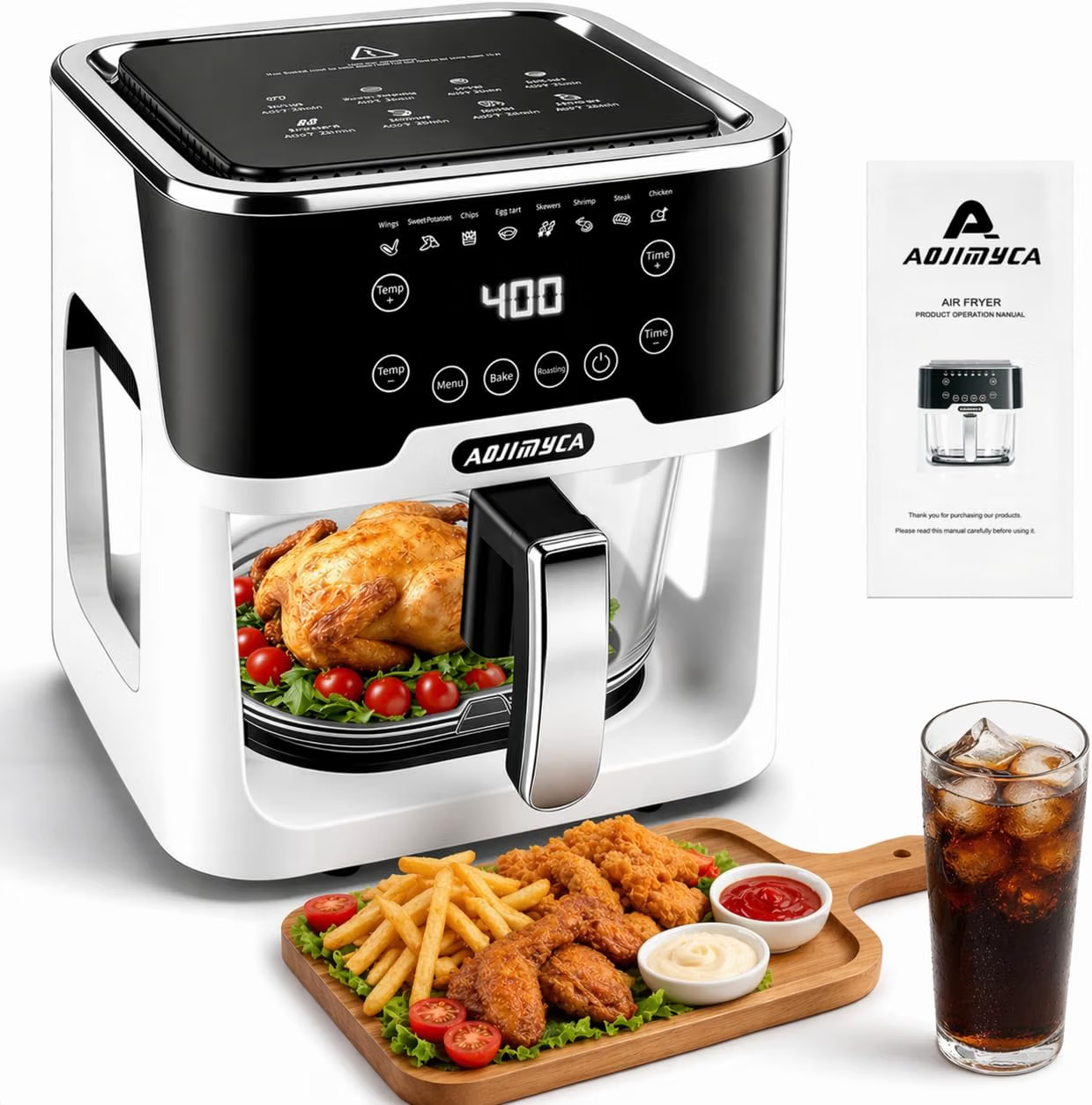
Air fryers have become a familiar part of many modern kitchens because they offer a convenient way to prepare a wide variety of foods using circulating heated air. While traditional basket-style air fryers remain popular, newer designs are introducing features intended to make the cooking process easier to observe and control.
The 6.0QT Glass Air Fryer with Touchscreen Control is built around two features that stand out from a conventional opaque basket design: a glass cooking area that allows greater visibility and a touchscreen interface for selecting and adjusting cooking settings. Its 6.0-quart capacity also places it in a size range that can work for a variety of everyday household meals.
The combination of visibility, digital controls, and air-frying functionality can be useful for cooks who want to monitor food while it is being prepared rather than opening the cooking compartment repeatedly. At the same time, the practical experience of using any air fryer depends on factors such as food quantity, airflow, temperature, cooking time, and preparation method.
This guide takes an informational look at the 6.0QT Glass Air Fryer with Touchscreen Control. It explains the basic concept behind the appliance, explores its main features and possible applications, discusses who may find this type of air fryer suitable, and highlights important considerations before incorporating a glass air fryer into an everyday kitchen routine.
Understanding the 6.0QT Glass Air Fryer
The 6.0QT Glass Air Fryer is a countertop cooking appliance designed to prepare food by circulating hot air around the cooking area.
The basic principle behind air frying is different from traditional deep frying. Instead of placing food into a large volume of hot oil, an air fryer uses heated air to cook the food. Depending on the recipe, a small amount of oil may still be used to support browning or help seasonings adhere to the surface.
The 6.0-quart capacity gives the appliance a moderate amount of cooking space for a countertop model. However, capacity should not be interpreted as a recommendation to fill the cooking area completely. Foods generally need enough room for hot air to circulate effectively.
What makes this particular design interesting is its glass cooking area. Being able to see food during the cooking process can make it easier to monitor browning, especially when preparing foods that change appearance noticeably as they cook.
The touchscreen control system adds another layer of convenience by providing a digital interface for managing cooking settings.
Together, these characteristics make the appliance more than a basic heating device. It is designed to provide a combination of air-frying functionality, visual monitoring, and digital control.
Key Features
6.0-Quart Capacity
The 6.0-quart capacity is one of the appliance’s primary specifications.
For everyday cooking, this size can provide more flexibility than very small countertop air fryers. It may be useful for preparing several portions of a side dish, cooking a moderate amount of protein, or handling larger batches of foods such as potatoes or vegetables.
However, the amount of food that can be cooked effectively depends on the food itself.
For example, fries may benefit from being distributed across the cooking surface rather than packed into a thick pile. Chicken wings may also cook more evenly when pieces are arranged with some space between them.
This distinction between total capacity and practical cooking capacity is important. More physical space does not necessarily mean that every recipe should be prepared at maximum capacity.
Glass Cooking Area
The glass construction is one of the most noticeable characteristics of this air fryer.
Traditional air fryer baskets can make it difficult to see food without opening the appliance. A glass cooking area provides a clearer view of what is happening during the cooking cycle.
This can be particularly helpful when learning how different foods respond to air frying.
For example, when cooking homemade potato wedges, a user can observe the progression from pale to golden brown. When preparing breaded chicken, the visible surface can provide an indication of how quickly the coating is browning.
Visibility can also reduce the temptation to repeatedly open the cooking compartment just to check progress. Keeping the cooking environment closed can be useful when maintaining consistent heat and airflow.
However, visual appearance should not be treated as a substitute for checking internal temperature when food safety requires it.
Touchscreen Control
The touchscreen interface provides a digital way to interact with the appliance.
Instead of relying exclusively on mechanical dials, users can select settings through the digital control panel.
A touchscreen can be useful for people who prefer a modern interface and want clearly displayed cooking information.
Digital controls also make it possible to adjust cooking settings according to different recipes.
For someone preparing the same type of food regularly, becoming familiar with the controls can make the cooking process more predictable. For new users, spending a few minutes learning the interface before preparing a full meal can be worthwhile.
Adjustable Cooking Settings
Air frying is not a one-temperature cooking method.
Different foods require different amounts of heat and time, and the ideal settings can change depending on food thickness, quantity, moisture, and starting temperature.
Adjustable settings give users the ability to customize the cooking process instead of relying on a single fixed program.
This is particularly useful when adapting recipes.
A frozen food package may recommend one set of instructions, while a homemade version of the same food may require a different approach. Manual adjustment allows users to make these changes.
Air Circulation
Air circulation is central to how an air fryer operates.
A heating system warms the air while the appliance moves that hot air around the food. This creates the environment used for air frying, roasting, and similar cooking methods.
Good airflow is one reason food placement matters.
When food is packed too tightly, some surfaces may receive less exposure to circulating air. This can contribute to uneven browning or longer cooking times.
Learning how much food to place in the cooking area is therefore an important part of using any air fryer effectively.
Countertop Format
The appliance is designed for countertop use, which means it can be incorporated into an everyday kitchen without requiring a permanent oven installation.
A countertop air fryer can be convenient for preparing smaller meals, side dishes, snacks, or reheated food.
At the same time, a 6.0-quart model still requires dedicated counter space. Before using it regularly, users should consider where the appliance will be placed and whether there is sufficient clearance around it.
How It Can Be Used
An air fryer can be used for far more than frozen fries.
The combination of heated-air circulation and adjustable controls makes this type of appliance suitable for a wide range of everyday foods.
French Fries and Potato Wedges
Potatoes are among the most common foods associated with air frying.
Frozen fries can be prepared according to the instructions supplied with the particular product. Homemade potato wedges can also be adapted for air frying.
For homemade potatoes, cutting pieces to similar sizes can help them cook at a more consistent rate.
Removing excess moisture before cooking may also help with browning. A light amount of oil can be used when appropriate, especially if the recipe calls for it.
The glass cooking area can be useful here because the user can monitor how quickly the potatoes are browning.
Chicken Wings
Chicken wings are another natural application.
The circulating hot air can cook the wings while helping the exterior develop a browned surface.
The amount of wings placed into the cooking area matters. Overcrowding can reduce airflow and make it harder for all pieces to cook at the same rate.
Depending on the recipe, turning or shaking the wings during cooking may help expose different surfaces to the circulating heat.
Since chicken is a food where internal temperature is important, a food thermometer can provide more reliable information about doneness than appearance alone.
Chicken Breast
Boneless chicken breast can also be prepared in an air fryer.
Chicken breasts vary considerably in thickness, which means that cooking times can differ even when the same recipe is used.
A thicker piece may require more time than a thinner one. Similarly, chilled chicken and chicken brought closer to room temperature may behave differently.
Seasoning can be kept simple with salt, pepper, garlic, paprika, herbs, or other preferred spices.
The glass cooking area makes it possible to monitor surface browning while the chicken cooks.
Shrimp
Shrimp can be particularly convenient for quick meals because smaller seafood portions can cook relatively quickly.
Shrimp can be seasoned with garlic, lemon, herbs, spices, or a simple blend of seasonings.
Because shrimp size varies, cooking time should not be treated as universal.
Overcooking can change the texture, so checking the food before the end of a suggested cooking period can be helpful when preparing a recipe for the first time.
Fish
Fish fillets can also be prepared using an air fryer.
A simple preparation might include seasoning the fish with herbs and spices before placing it in the cooking area.
Breaded fish is another possible application.
The thickness of the fillet is important. Thin pieces can cook considerably faster than thick portions.
The glass design can make it easier to monitor surface browning, particularly when using a breaded preparation.
Roasted Vegetables
Vegetables are one of the most flexible categories for air-fryer cooking.
Examples include:
- Broccoli
- Cauliflower
- Carrots
- Brussels sprouts
- Zucchini
- Bell peppers
- Asparagus
- Sweet potatoes
- Green beans
- Mushrooms
Vegetables can be seasoned with herbs, spices, garlic, or a small amount of oil.
Cutting vegetables into relatively uniform pieces helps them cook at similar rates.
The 6.0-quart cooking area can provide enough room for moderate batches, although overcrowding should still be avoided.
Reheating Leftovers
An air fryer can also be useful for reheating certain foods.
Pizza, roasted vegetables, breaded chicken, fries, and similar foods may benefit from reheating with circulating hot air because it can help maintain or restore surface texture.
The appropriate setting depends on the food.
Using a lower temperature and checking the food periodically can help reduce the risk of drying out leftovers.
Frozen Foods
Frozen foods are another convenient use.
Frozen fries, breaded chicken, fish products, vegetables, and various snacks can often be adapted to air-fryer cooking.
The instructions on the food packaging are a useful starting point, but users may need to adjust settings depending on how the particular air fryer cooks.
The glass cooking area can be especially convenient for frozen foods because it allows users to observe browning without repeatedly opening the appliance.
Toasted or Crisped Snacks
Air fryers can also be used for smaller snacks.
Items such as seasoned chickpeas, tortilla pieces, vegetable chips, or small appetizers can be prepared with appropriate settings.
Because small foods can cook quickly, frequent checking toward the end of the cooking period can be useful.
Meal Preparation With a 6.0-Quart Air Fryer
The 6.0-quart format can be useful for simple meal preparation.
Rather than using the air fryer exclusively for snacks, users can build complete meals around it.
For example, roasted vegetables can accompany chicken, fish can be served with potatoes, or air-fried shrimp can be paired with rice and salad.
One advantage of this approach is flexibility.
The same appliance can be used for different components of a meal without requiring several cooking devices.
However, the air fryer is still a relatively compact cooking appliance. When preparing food for a large household, multiple batches may be necessary.
Preparing Foods in Batches
Batch cooking can make the appliance useful for meal preparation.
For example, a user could prepare vegetables first, then cook chicken or another protein.
The glass cooking area can make it easier to observe the progress of each batch and develop a better understanding of how long different foods take.
Over time, this can help users create their own cooking routines.
Who the 6.0QT Glass Air Fryer May Be Suitable For
People Who Like Visual Cooking
The glass design may be particularly useful for cooks who prefer to monitor food while it cooks.
Rather than opening the appliance repeatedly, users can observe surface changes through the glass.
This can be helpful when experimenting with unfamiliar recipes.
Beginners Learning to Use an Air Fryer
A visible cooking area and touchscreen interface can make the cooking process easier to understand for someone new to air frying.
Beginners can observe how quickly different foods brown and how food quantity affects cooking time.
That said, beginners should still learn the basic principles of airflow, food safety, and appropriate temperature control.
Small and Medium Households
A 6.0-quart capacity can be appropriate for moderate household cooking.
The actual number of servings depends on the food being prepared, serving size, and whether the recipe requires a single layer.
For larger families, the appliance may still be useful, but some meals may require multiple batches.
People Looking for Countertop Convenience
A countertop air fryer can be useful for people who want an alternative to heating a full-size oven for smaller meals.
It can be especially convenient for quick side dishes, reheating, and moderate portions.
Home Cooks Who Want Digital Controls
The touchscreen interface may appeal to people who prefer digital controls over traditional knobs.
The ability to adjust cooking settings can also be useful when experimenting with different recipes.
Important Things to Consider
Capacity Does Not Mean Maximum Fill
The 6.0-quart designation describes the general capacity of the cooking compartment, but that does not mean every food should be packed into all available space.
Air circulation is important.
If food is overcrowded, the hot air may not reach all surfaces equally.
For foods such as fries, vegetables, and wings, spreading the food out appropriately can help improve consistency.
Food Thickness Matters
Two pieces of the same food can have different cooking times.
A thin chicken breast will not necessarily require the same amount of time as a thick one.
The same principle applies to fish, steak, potatoes, and other foods.
When adapting recipes, food thickness should always be considered.
Visual Browning Is Not a Food-Safety Test
The glass cooking area makes it easier to see the outside of the food.
However, a browned surface does not necessarily mean that the interior has reached the appropriate temperature.
This is especially important for poultry, meat, and seafood.
When appropriate, use a food thermometer to verify internal temperature.
Countertop Placement
The appliance should be positioned on a suitable stable surface.
Because air fryers generate heat during operation, there should be adequate clearance around the unit.
The exact placement and clearance requirements should follow the manufacturer’s instructions.
Cleaning
Regular cleaning is part of maintaining any kitchen appliance.
Food particles and grease can accumulate over time.
The cooking components and interior should be cleaned according to the manufacturer’s care instructions.
Users should avoid abrasive cleaning methods if the manufacturer does not recommend them.
Learning the Touchscreen
Digital controls can be convenient, but every interface has its own operating logic.
Before cooking a complicated meal, it may be useful to become familiar with the touchscreen and understand how to select, adjust, start, pause, and stop cooking functions.
This can make the appliance easier to use during busy meal preparation.
Glass Air Fryer vs. Traditional Basket Air Fryer
The most obvious difference between these categories is visibility.
A traditional basket air fryer usually places the food inside an opaque basket or drawer, while a glass model allows greater visibility into the cooking process.
Both rely on circulating heated air.
The traditional basket design can be compact and straightforward, while a glass cooking design can provide a more observable cooking process.
The choice depends largely on personal preferences and kitchen habits.
Someone who frequently checks food during cooking may appreciate the visibility of a glass design. Someone who prefers a conventional basket format may find that approach more familiar.
Glass Air Fryer vs. Air Fryer Toaster Oven
An air fryer toaster oven generally provides a larger horizontal cooking chamber with trays or racks.
A 6.0-quart glass air fryer is more focused on basket-style or contained air frying while still providing visibility.
The toaster-oven format can be useful for larger flat foods, toast, baking, and multi-level cooking.
The 6.0-quart format can be more compact and focused on everyday air-fryer meals.
The appropriate category depends on whether the priority is compact air frying or broader countertop oven functionality.
Air Fryer vs. Conventional Oven
A conventional oven provides substantially more overall cooking space and is generally more suitable for large dishes and multiple large items.
An air fryer is a smaller countertop appliance designed around concentrated heated-air circulation.
For small meals and side dishes, a countertop air fryer can be convenient.
For large family meals, holiday cooking, or multiple large baking dishes, a conventional oven remains more practical.
These appliances can serve different purposes in the same kitchen.
Practical Tips for Better Air-Frying Results
Avoid Excessive Crowding
Leaving adequate space around food helps maintain airflow.
If a batch is too crowded, consider dividing it into two smaller batches.
Cut Food Consistently
Uniform pieces generally cook more evenly than pieces of very different sizes.
This is particularly important for potatoes and vegetables.
Dry Ingredients When Appropriate
Surface moisture can affect browning.
Patting certain foods dry before seasoning can help reduce excess moisture.
Use Oil Strategically
Air frying does not require completely eliminating oil from every recipe.
A small amount may be appropriate for certain foods, particularly when seasoning needs to adhere to the surface or when additional browning is desired.
Check Food as You Learn
Cooking times are guidelines rather than guarantees.
When preparing a new food, check it toward the end of the recommended time.
Once you understand how the appliance handles that particular recipe, future batches can become easier to manage.
Turn or Shake Food When Needed
Some recipes benefit from turning or shaking halfway through cooking.
This can help expose different surfaces to the circulating heat.
The need for this depends on the food, cooking arrangement, and recipe.
Frequently Asked Questions
What is a 6.0-quart air fryer?
A 6.0-quart air fryer is a countertop cooking appliance with a cooking compartment designed around approximately six quarts of stated capacity. It uses circulating heated air to cook food.
What makes a glass air fryer different?
The main distinction is visibility. A glass cooking area allows users to observe food while it cooks instead of relying entirely on opening the cooking compartment to check progress.
Does the glass design change how air frying works?
The core cooking principle remains based on heated-air circulation. The primary practical difference is that the cooking process can be more visible.
What can I cook in a 6.0-quart air fryer?
Possible foods include fries, potato wedges, chicken wings, chicken breast, shrimp, fish, vegetables, frozen foods, snacks, and reheated leftovers.
Can I cook frozen foods?
Yes. Air fryers are commonly used for frozen foods. The specific cooking time and temperature should be based on the food’s instructions and adjusted as needed.
Can I cook vegetables in it?
Yes. Vegetables such as broccoli, cauliflower, carrots, zucchini, Brussels sprouts, and peppers can be prepared using appropriate air-fryer settings.
Can I cook chicken?
Chicken can be prepared in an air fryer. Because poultry needs to reach an appropriate internal temperature, a food thermometer can be useful for checking doneness.
Can I cook shrimp?
Shrimp can be prepared in an air fryer. Since shrimp vary in size and can cook relatively quickly, it is useful to monitor them closely.
Can I cook steak?
An air fryer can be used for certain steak preparations. Cooking time depends on the cut, thickness, starting temperature, and desired doneness.
Is a touchscreen difficult to use?
The touchscreen provides a digital control interface. The exact user experience depends on the appliance’s interface, so familiarizing yourself with the controls before cooking can be helpful.
Does a larger capacity mean I can cook everything at once?
Not necessarily. Food still needs enough space for air circulation. Some foods may need to be arranged in a single layer or cooked in multiple batches.
Does an air fryer eliminate the need for oil?
Not necessarily. Air frying generally requires much less oil than traditional deep frying, but some recipes may still benefit from a small amount.
Can I use an air fryer to reheat food?
Yes. Air frying can be useful for reheating foods such as pizza, fries, breaded items, and roasted vegetables where maintaining surface texture is desirable.
Is a glass air fryer suitable for beginners?
It can be. The visible cooking area can help beginners observe how food changes during cooking, while the touchscreen provides digital control over the cooking process.
Is a 6.0-quart air fryer suitable for a family?
It can be suitable for moderate household portions, but the actual number of servings depends on the recipe and how much space the food needs for proper airflow.
How often should an air fryer be cleaned?
Cleaning frequency depends on how often the appliance is used and what foods are prepared. Cleaning after use or according to the manufacturer’s care recommendations can help prevent buildup.
Conclusion
The 6.0QT Glass Air Fryer with Touchscreen Control combines several features designed around convenience and visibility. Its 6.0-quart capacity provides a moderate amount of cooking space, while the glass cooking area allows users to observe food during preparation.
The touchscreen interface adds digital control over cooking settings, giving users the ability to adjust the process for different foods and recipes. Together, these features can make the appliance useful for everyday cooking tasks ranging from fries and chicken wings to shrimp, fish, vegetables, frozen foods, and reheated leftovers.
The glass design is particularly interesting for cooks who like to monitor food without repeatedly opening the cooking compartment. Watching browning and surface changes can also help users learn how different ingredients behave under circulating heat.
At the same time, the usual principles of air frying still apply. Food needs sufficient space for airflow, cooking times vary according to portion size and thickness, and visual browning should not be used as the only indication of safe doneness for meat, poultry, or seafood.
Compared with a traditional basket air fryer, the visible cooking area provides a different style of interaction. Compared with an air fryer toaster oven, the 6.0-quart format is more focused on contained air-fryer cooking rather than providing a broad oven-style workspace.
For households looking for a countertop air fryer that combines a moderate capacity with a visible cooking area and touchscreen controls, this type of design offers several practical features to consider. The best results will ultimately come from understanding the appliance’s controls, using appropriate food quantities, allowing adequate airflow, and adjusting cooking settings according to the specific recipe.
Leave a Reply